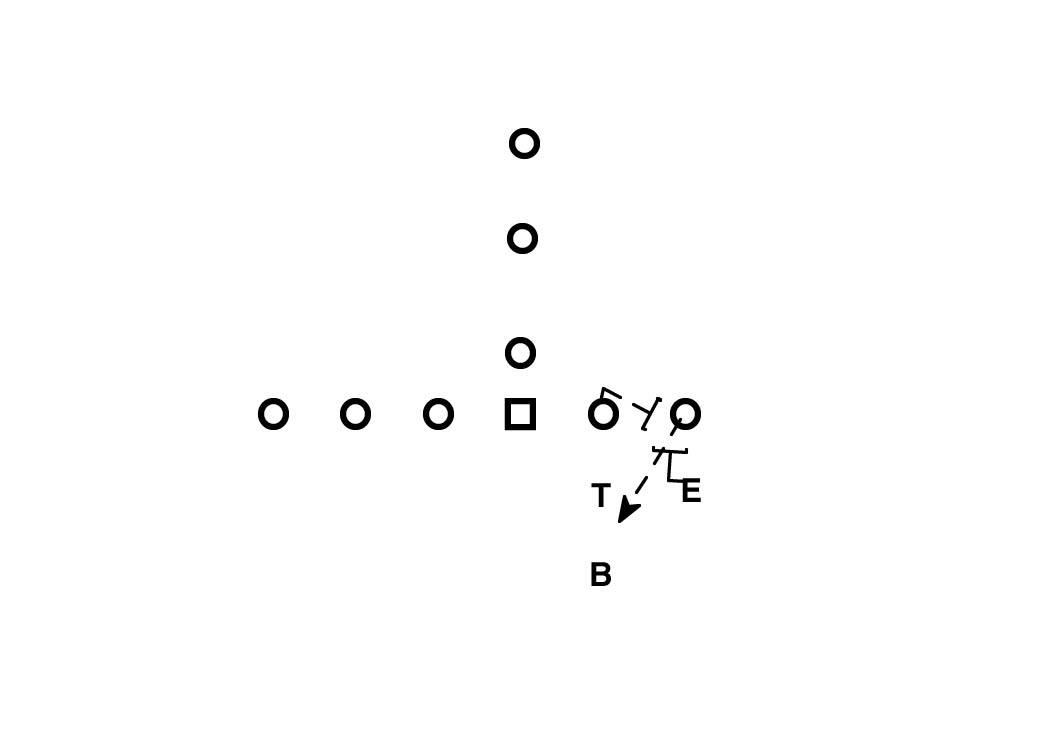
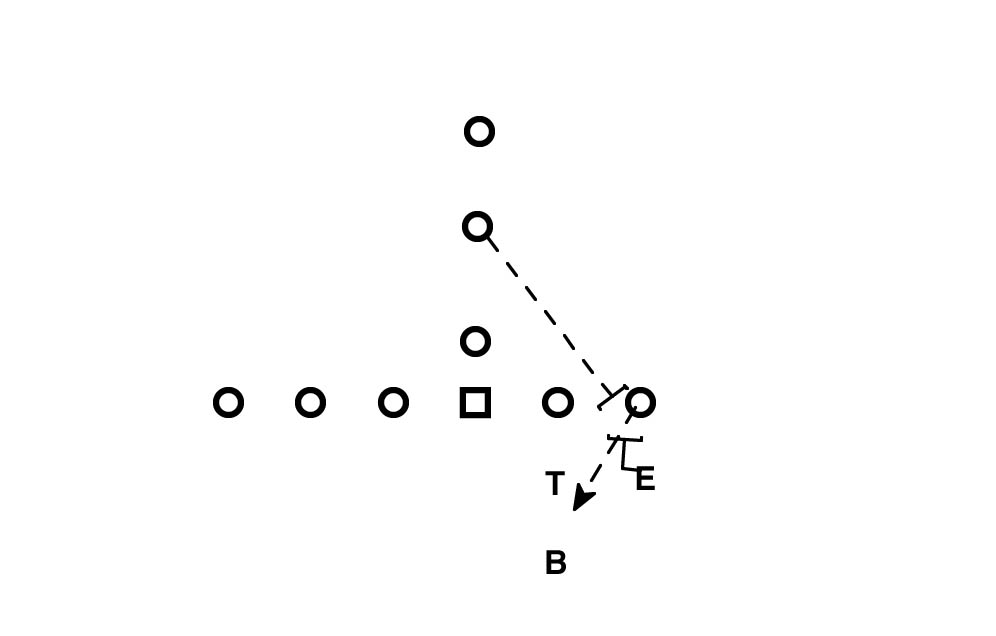
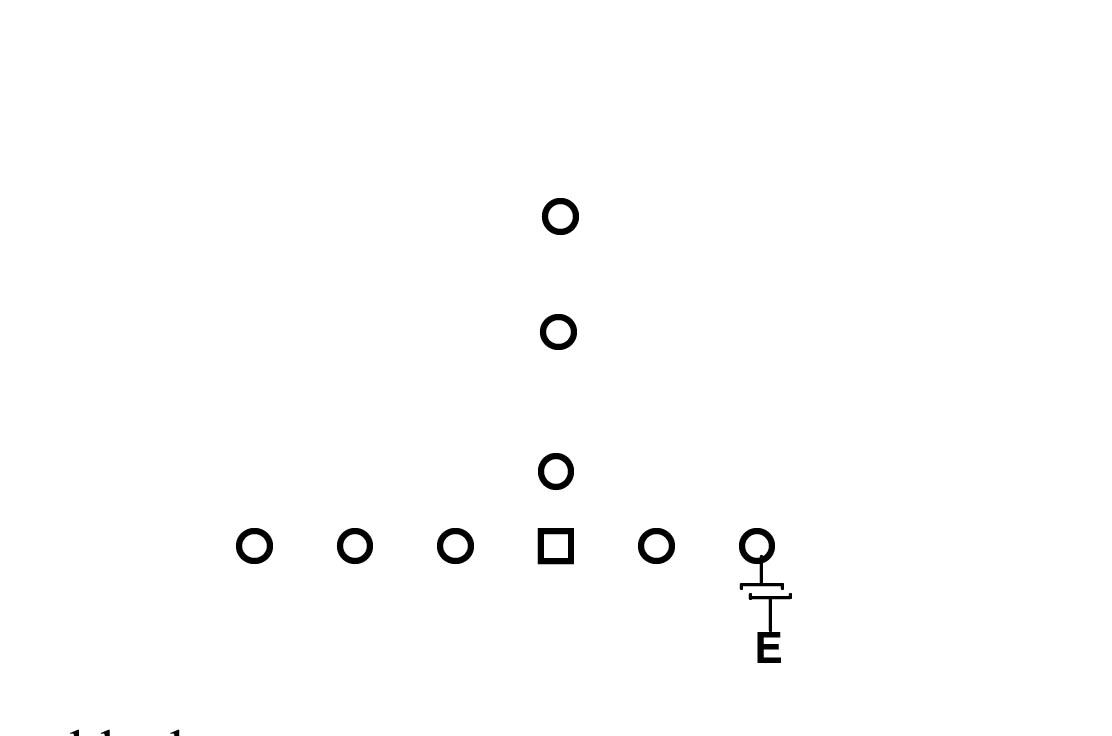
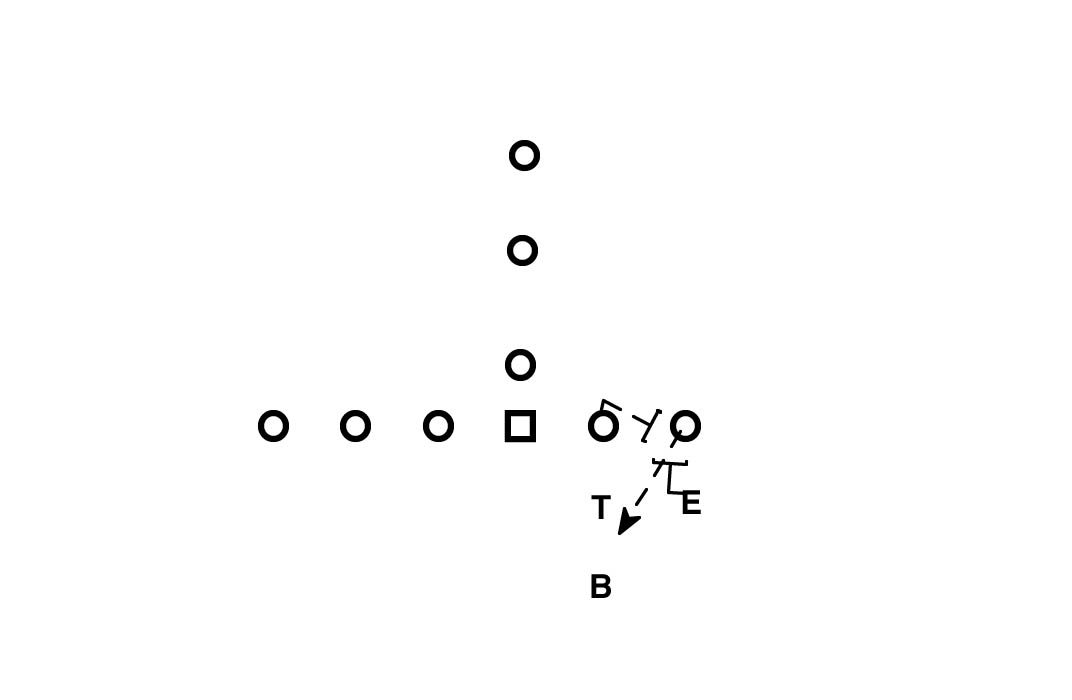
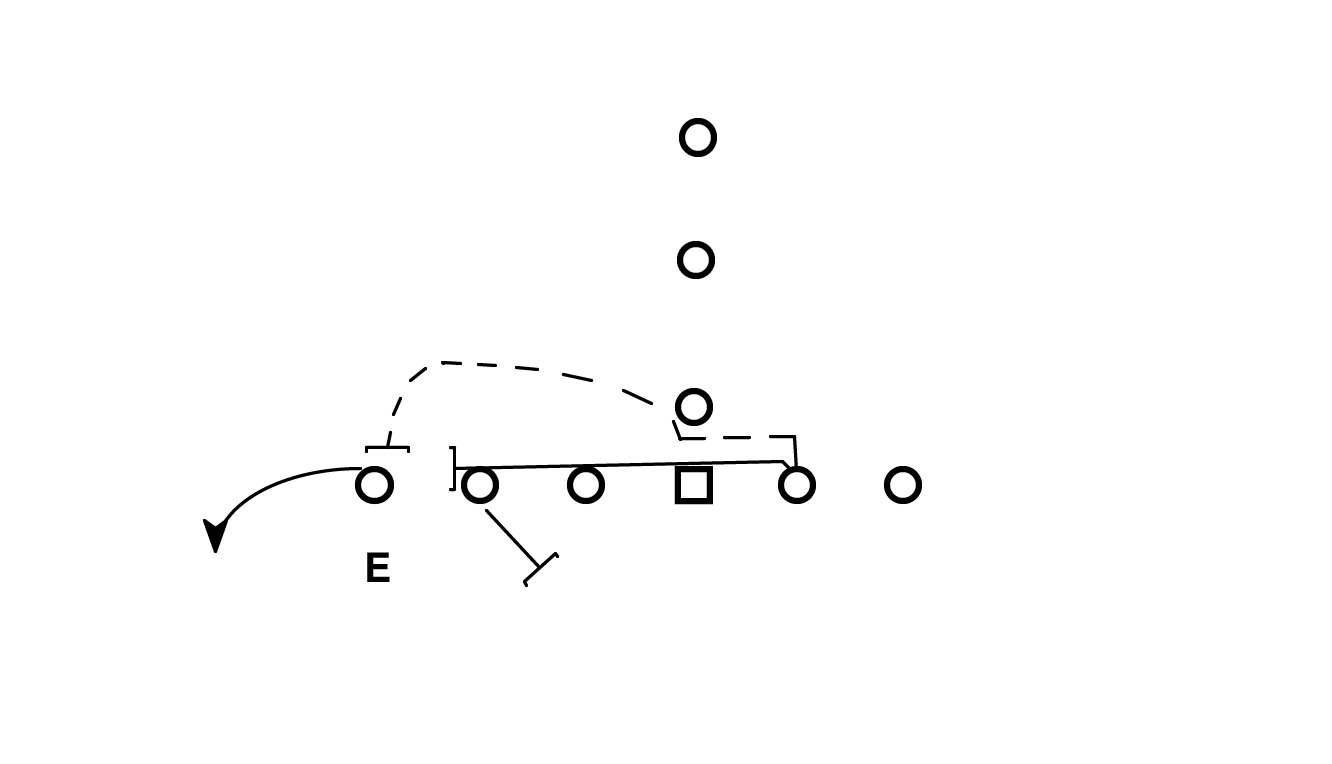
Most of the defensive ends I have coached over the years have had one flaw - they all thought they were linebackers! This flaw is what made them good defensive ends. Once they understood that they are a pretty important part of the defensive scheme, there was a total buy in.
The defensive end’s role is multi-faceted - they must be able to control a tight end blocking down on a linebacker, and take on a trapper or kick out block by the fullback. In a forty front, the defensive end is responsible for containing the QB and being able to recognize a screen. Then there is my favorite: the inside and outside veer. The games offenses will play in order to influence the end in order to open up running lanes and/or cause the end to second guess his option responsibility.
There are many basic fundamentals to teach defensive ends on a daily basis, but what you focus on during the week should be based on the offensive scheme. With a detailed scouting report, the defensive end coach should be able to isolate the various blocks that they will encounter on game day. For example, a team that runs a lot of tackle trap or counter most likely will run some form of play action. The end will need to be able to close on the tackles, pull and read the triangle to see what the QB is doing. The end must check for boot with a pulling guard or a naked boot and take the proper angle of 45 degrees to contain the QB and make him pull up and throw.
There are no real tricks in teaching the basic techniques but it is consistency in the teaching and repetitions of the skill that will enable them to read and react to each scenario the offense presents. The basic drills for each block are described later in this article, and they are broken up into phases to optimize learning.
The techniques are taught using verbal, visual and physical stimulus. In the beginning, I have the players call out the technique they are using, For example, if the blocker steps inside the end shouts “CLOSE”, or on a drive block the end shouts “JAM” – which helps him to identify the technique – just as the end yells “PASS” to communicate his read and help his teammates identify the play. During our pre-practice period I have the ends walk through the basic reads (reach, close, jam, etc.) and combine those reads with schemes.
Another technique I use to teach ends their reads during practice is to ask the ends, “What did you see?”, which not only helps them visualize the read but to verbalize it. What I have witnessed with the more seasoned player is that they self-correct and start to tell me what they did wrong. I truly believe when a player recognizes what he did wrong he is a much better player and is much more coachable. Don’t get me wrong. Sometimes, I have to stop them before they speak and correct them with a dose of “Loud Love”.
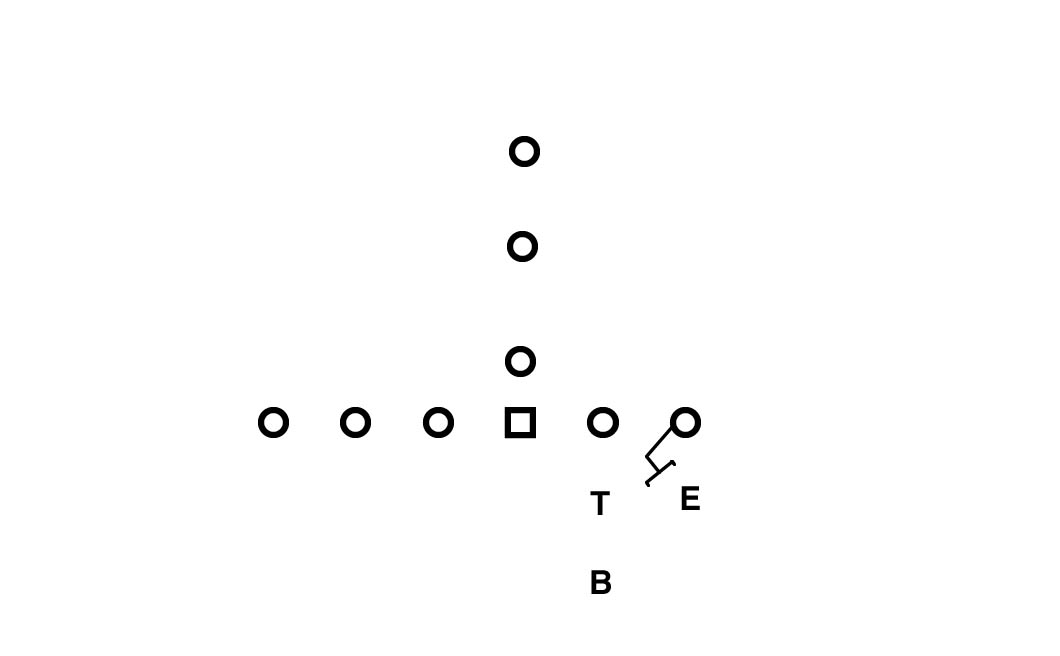
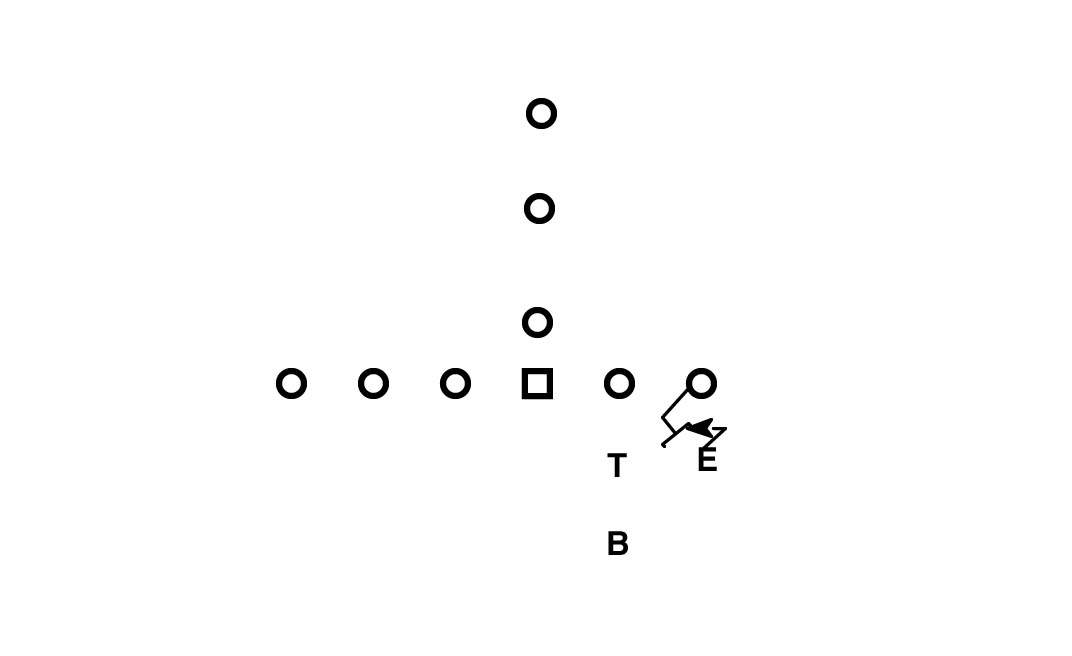
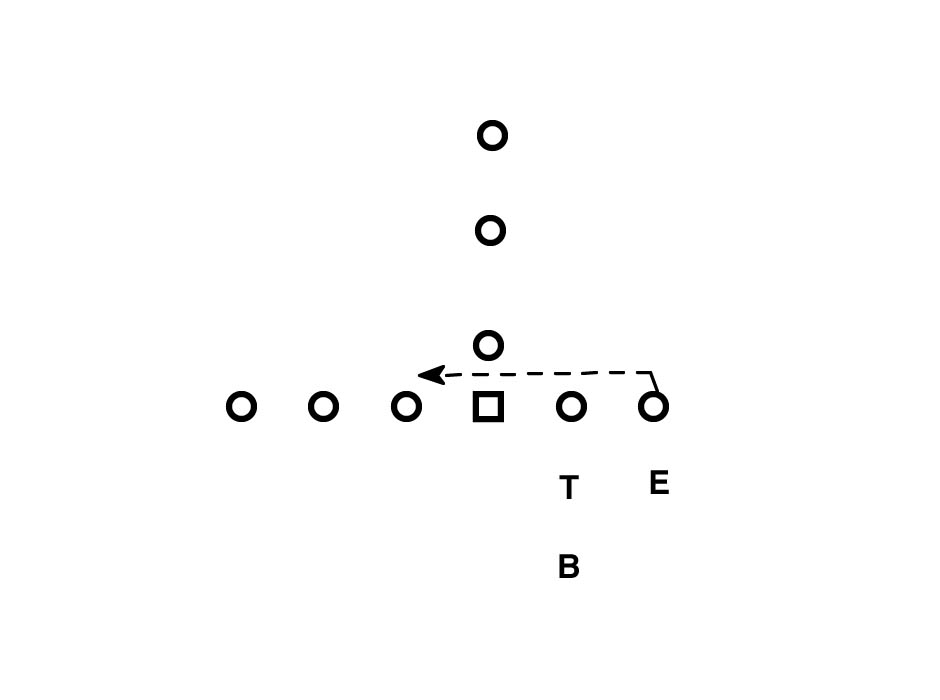
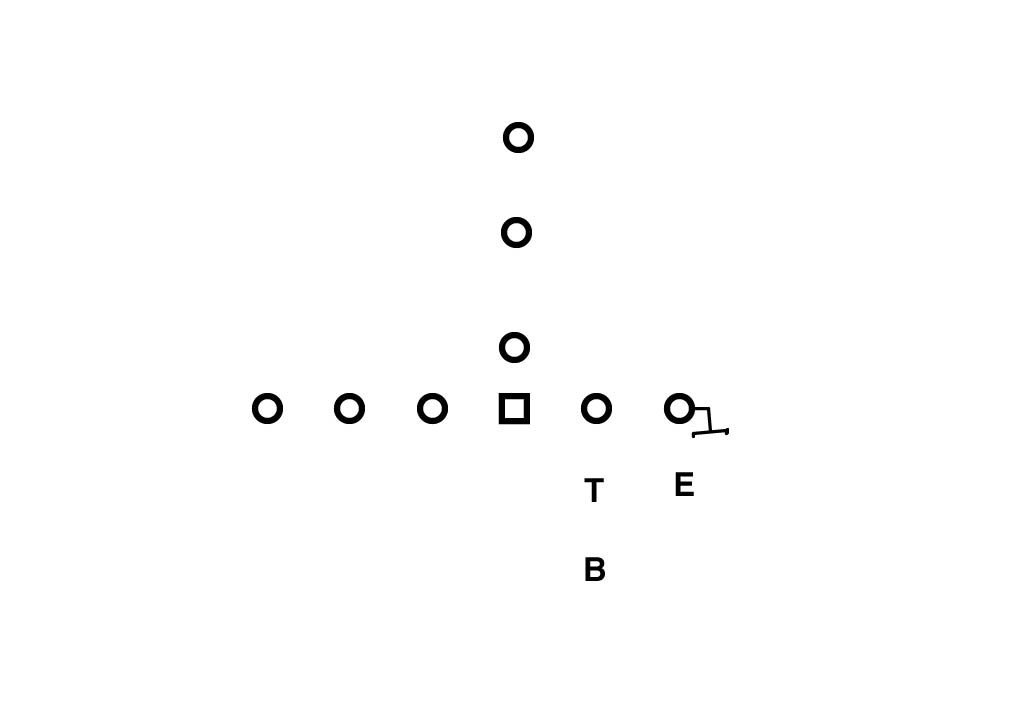
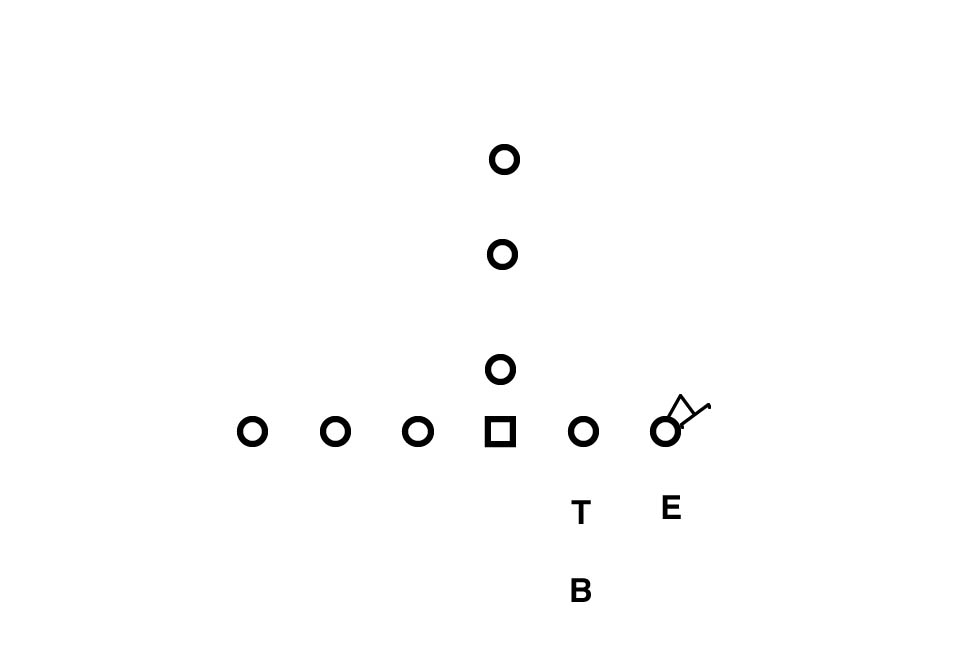
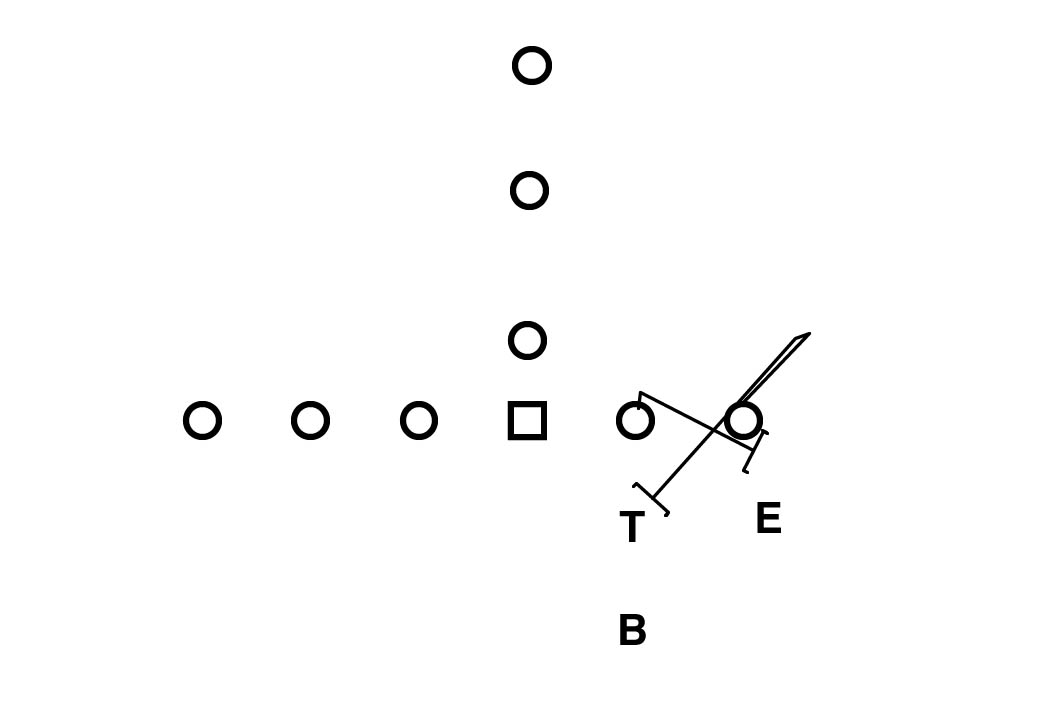
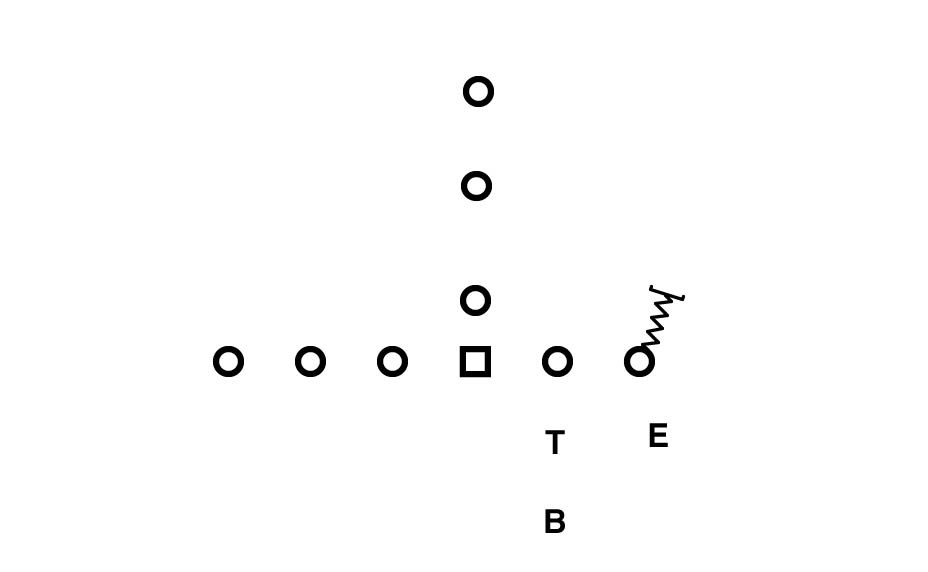
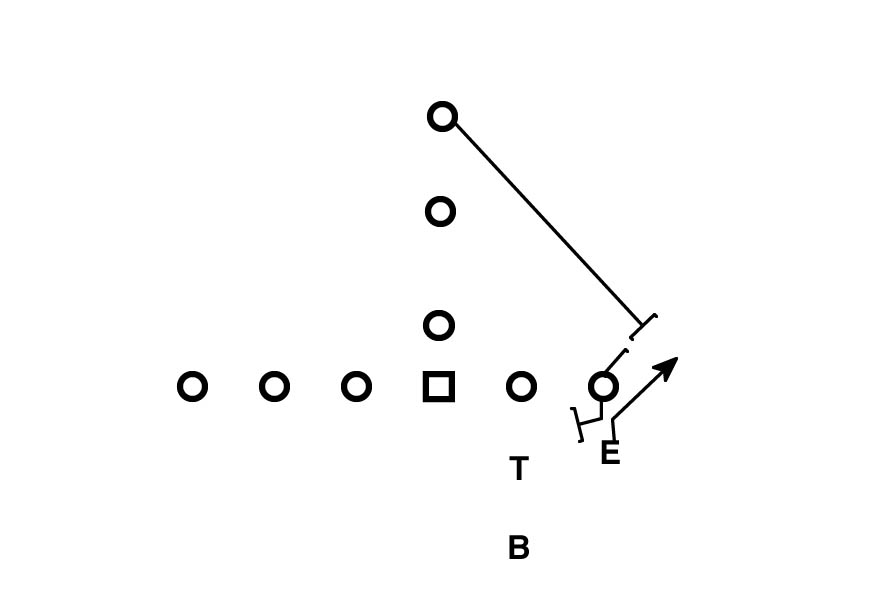
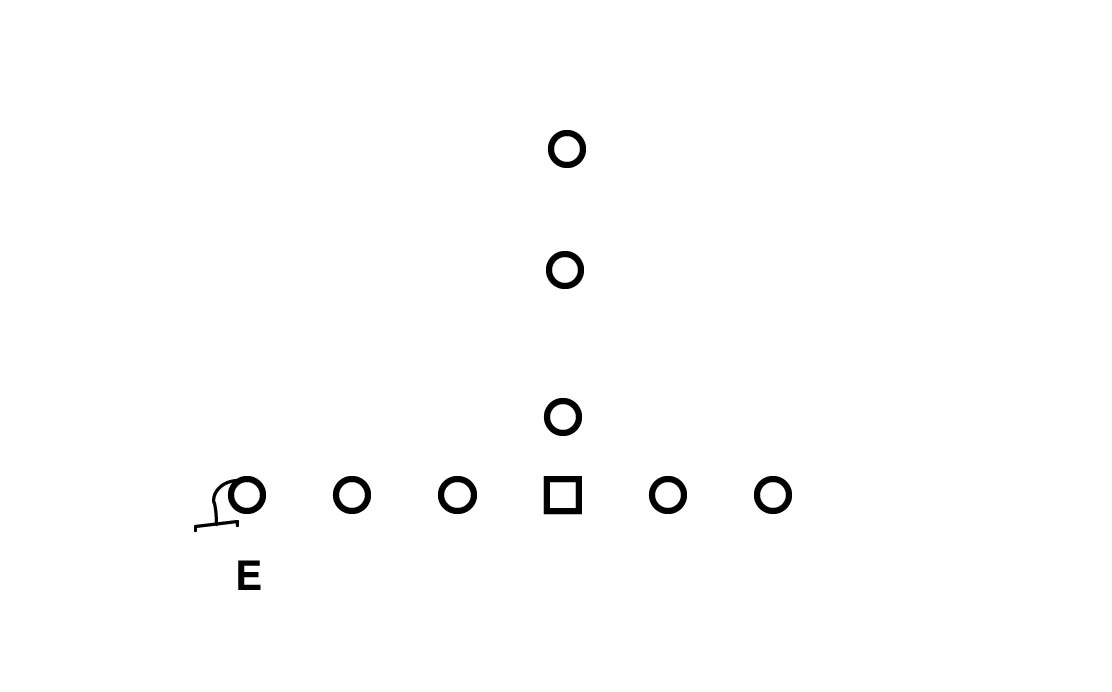
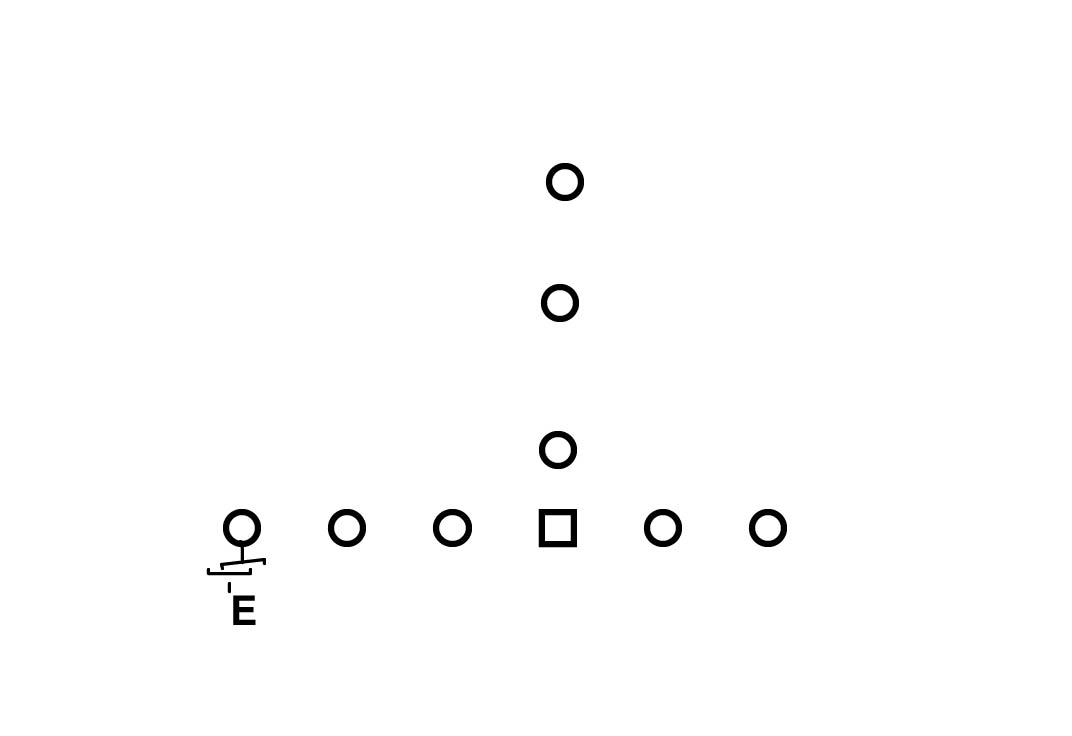
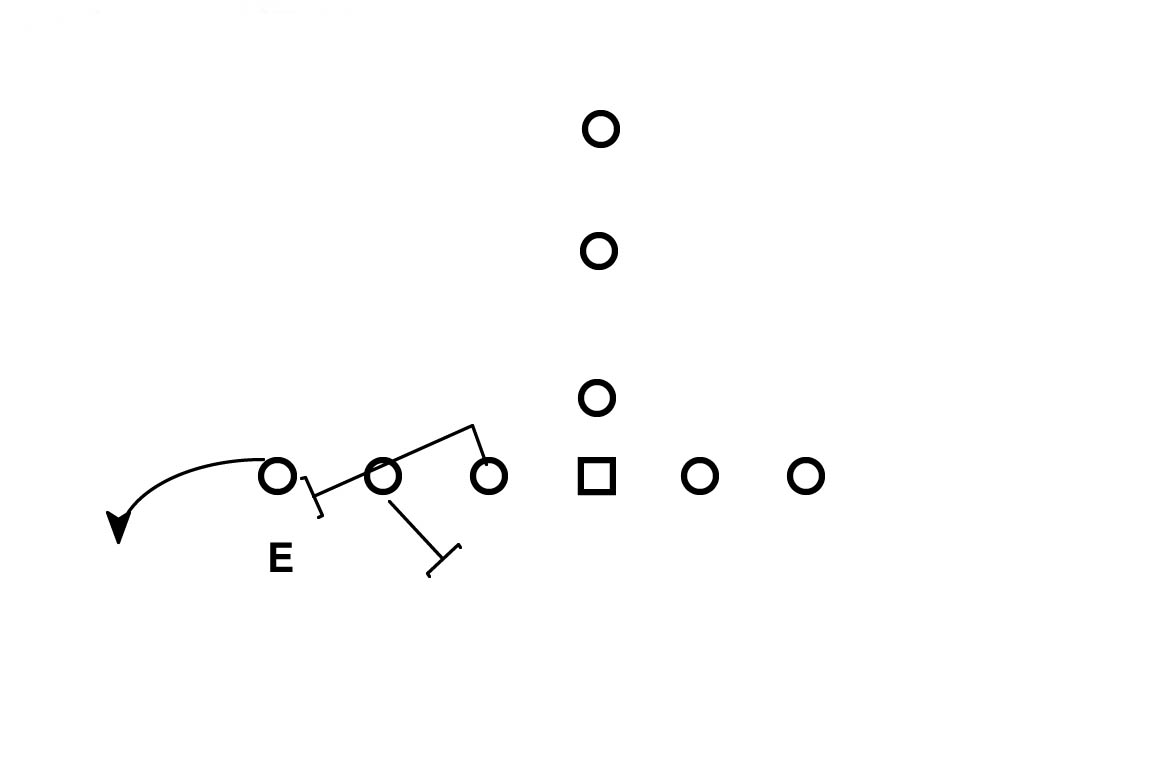
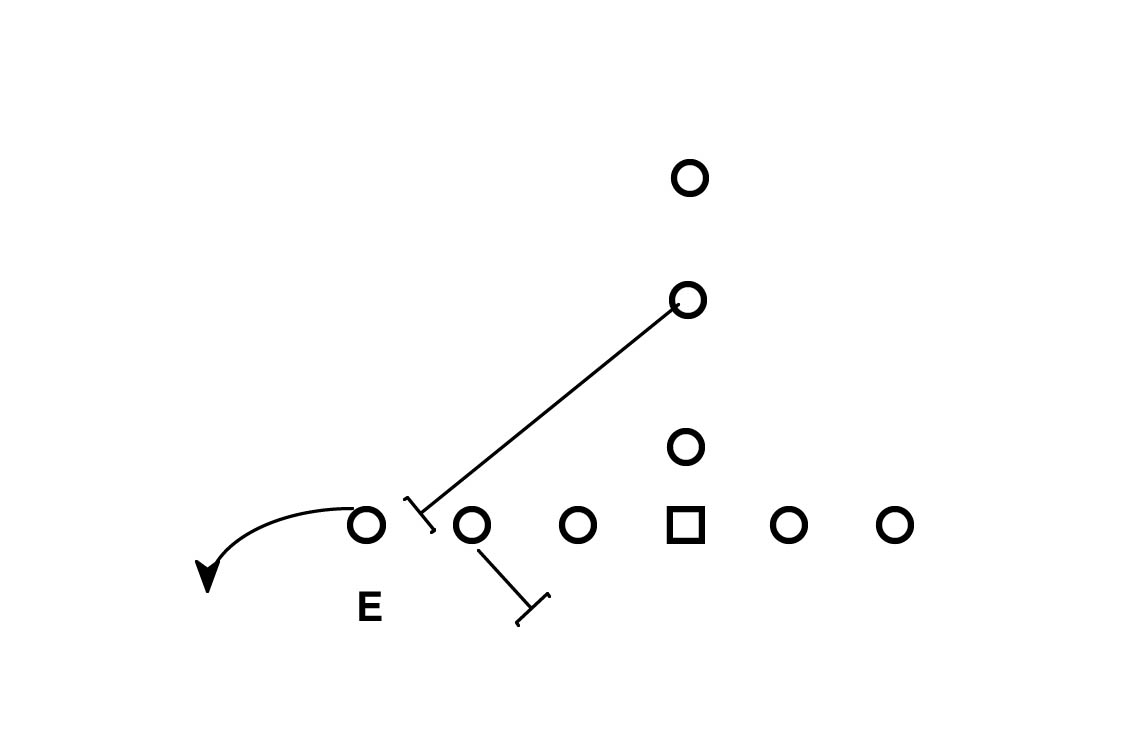
In the diagrams, you will see that I used a basic heads-up technique for both ends whether they are aligned to a tight end or offensive tackle. The head-up technique creates an advantage for the ends by keeping the blockers from stepping on an inside track to linebackers and being able to control the reach block. As I said, there are no tricks to coaching defensive ends. All you need is the ability to be creative in setting up drills that replicate blocking schemes they will encounter on game day.
Defensive End Stance
1. Feet are armpits-width apart, parallel to the line of scrimmage.
2. Knees bent at a 45-degree angle along with your back flat and your head focused on the screws of the tight end’s helmet.
3. Your weight should be distributed on the balls of your feet.
4. Your arms and elbows should be on the inside of your knees ensuring the “elbows in, thumbs up” concept.
FOOT POSITION - Parallel or Staggered?
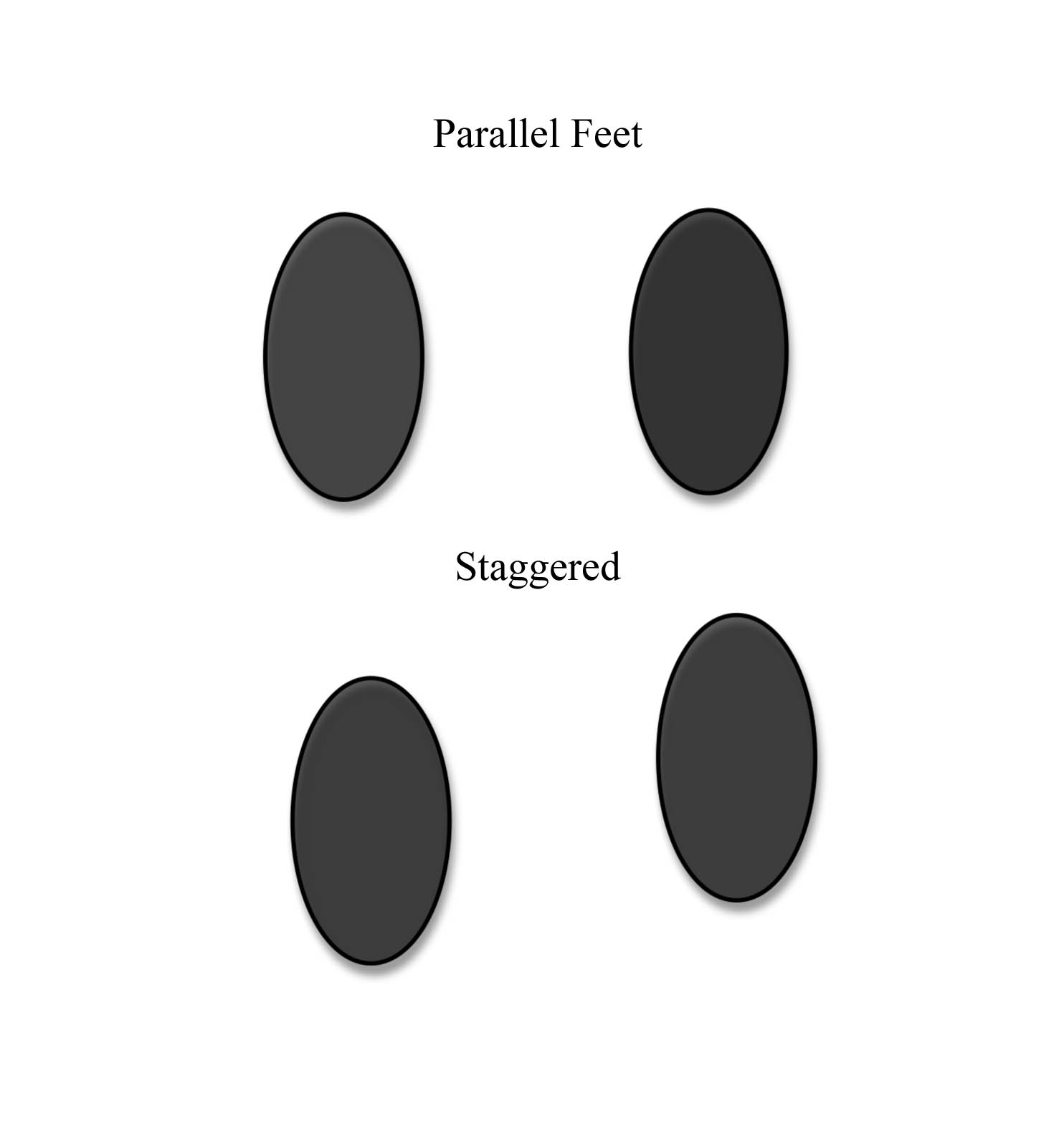
The defensive end’s footwork is critical to defeating the offensive lineman’s block. Quick feet along with simultaneously striking the breastplate will keep the offensive lineman from reaching the linebackers.
The decision to use the parallel or staggered foot stance depends on your players and which stance is most productive. A parallel foot stance sometimes causes players to drop step, give up ground and lose strength on initial contact. On the other hand, a slight stagger in foot alignment can correct players from drop stepping. With the inside foot slightly staggered a toe-to-instep relationship will sometimes correct the problem. The coach must evaluate which is best and must practice mirror stepping every day during practice.
KEYS: Reading the Triangle

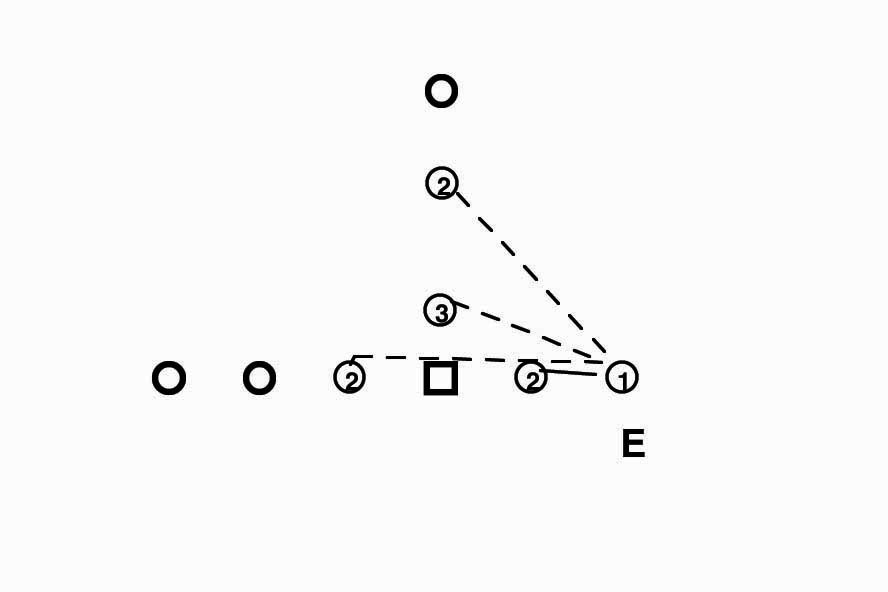
1. Vs. Tight End:
Visual Key- Tight End
Pressure- Adjacent tackle, near back, near guard, far guard, ball
2. Vs. Tackle:
Visual Key- Tackle
Pressure- Near back, near guard,
far guard, ball
Read Progression:
A. Tight end or tackle
B. Read through the triangle-pick up next threat to determine reaction technique.
1. Near back
2. Guard
3. QB
Technique vs. Tight End release
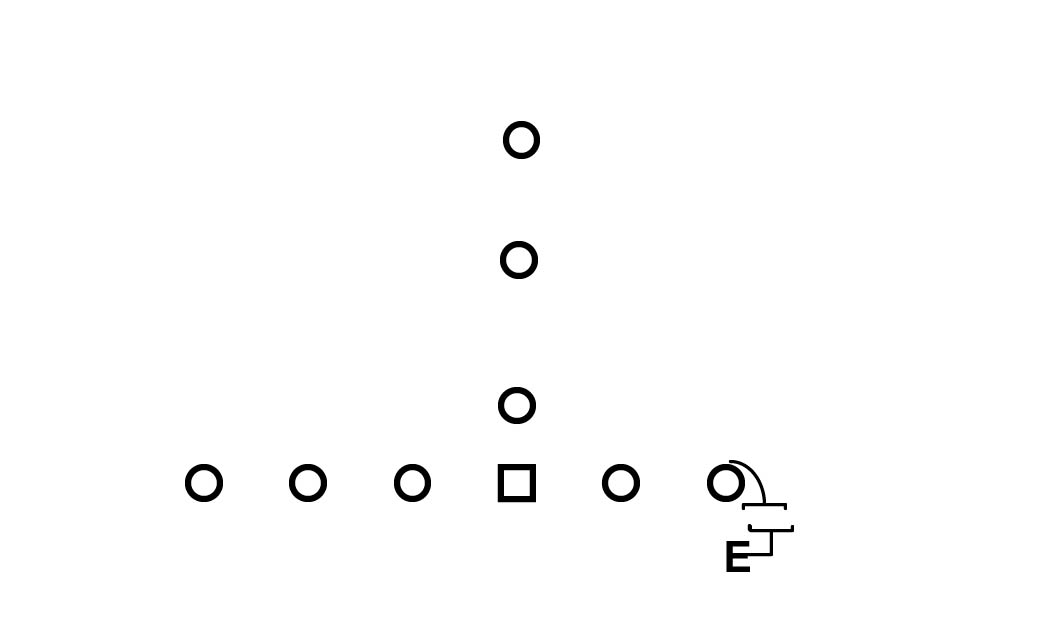
TE Release
Option Release- With an outside release retrace your steps and snap your head back inside. Play your option responsibility whether it be QB or RB.
Run Release- Once you read release, look for the next part of triangle.
Pass Release- You have contain rush. Key tackle for pass set. If tackle shows pass, use pass rush technique.
NEVER LET THE TIGHT END RELEASE FREE, GET HANDS ON BREAST PLATE!!!!
A. Recognizing a no contact release: swivel head back inside, retrace your steps, and sit on the line of scrimmage until you identify the scheme. Identify the scheme by looking through the next part of the triangle. Read and react.
B. Vs. run: read through the triangle. Identify the near back or find the location of the ball.
C. Vs. pass: read through the triangle. Identify the pass pro, read the tackle then near back to the ball.
Near-Arm Technique: As you take on the first color, take your arm and shoulder with your body, staying square to the line of scrimmage and drive it into the sternum of the blocker. Very important not to wait for the blocker. Work squarely and low towards him, forcing the play to bounce outside.
5 Technique
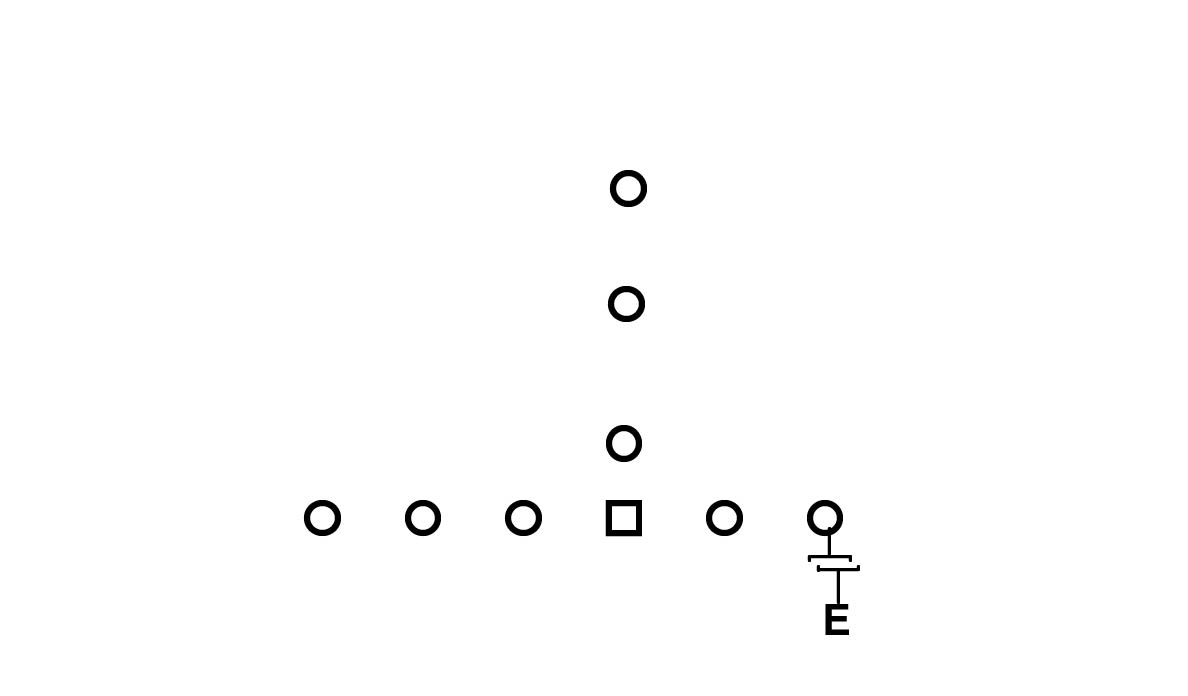
Stance: Parallel or slight stagger
Alignment: Head up
Keys:
1. Helmet bolts of offensive tackle
2. Near back
3. Pursuit ball on plays away
4. Ball
Responsibilities:
1. C gap control
2. Fill on runs to you
3. Pursuit ball on plays away
4. Contain pass rusher
Execution:
1. Reach block: Take a mirror step with the outside foot and deliver a two point blow to the breast plate with inside hand and control the tackles outside shoulder with arm extension. Work the tackle upfield. Control the C cap and squeeze the B cap.
2. Drive Block: As the bolts of the helmet drive towards you, take a six inch power step with your inside foot simultaneously delivering a two point below to chest plate of shoulder pads. Use arm extension and lock out, stay nose up with outside leverage until ball carrier declares.
3. Down Block:
A. Near Guard: Take a mirror step inside with the inside foot and deliver a two-point blow with arm extension. Keep the tackle off the linebacker. Attack the guard according to angle of the attack.
B. Near Back: Take a mirror step with the inside foot and deliver a two-point blow with arm extension. Keep tackle off the linebacker. Attack the back according to angle of attack.
C. Far Guard or Tackle: Take a mirror step with inside foot and deliver a blow with arm extension keep tackle off linebacker. Read the depth of guard or tackle pull and attack the blocker using the near arm technique. If guard or tackle pulls deep, get upfield and contain bootleg.
D. Cutoff: Take a mirror step with inside and deliver a two-point blow with arm extension. Recognize all action away, flatten and pursue along the line of scrimmage (as deep as the deepest back). If you see a reverse, get upfield and force ball carrier inside.
E. High Wing: Take a mirror step with inside foot and deliver a two-point blow with arm extension. As tackle tries to turn you out, work to keep your shoulders square until the ball has cleared C gap, and use the proper angle of pursuit.
F. Tackle Pull: Take a mirror step with inside foot to confirm your read. Get width and depth to stop bootleg. Once you have determined there is no bootleg, work back to line of scrimmage and use the proper angle of pursuit.
Pass Set
A. Aggressive: Play initially like reach block. As you recognize ball off the line work laterally to contain the QB. Rush from the outside in.
B. Drop Back: Use visual key of tackle to make sure it is a pass. Use a pass rush technique (always have a plan). Keep the quarterback on your inside shoulder. Never get deeper than the depth of QB.
C. Tackle Set/Down Block-Guard Pull: Start pass rush technique until you see tackle down block. Pull up and close inside looking to trap the trapper. You have leverage on the inside of the trapper.
D. Tackle Set/Draw: Start pass rush technique until you read draw. Retrace your steps and attack draw from the outside in.
E. Sprint Out: Get off the blocker and focus your attention on the backs. Work to contain by moving at the same angle as the QB. If two backs attack avoid the first back and attack the second. YOU MUST KEEP YOUR FEET!
Note: The end should attack the sprint out backs at a 45-degree angle to defeat the blocks and contain the quarterback.
7 Technique
Stance: two-point parallel or stagger
Alignment: Head up
Keys:
1. Helmet bolts of the tight end or those
of the tight slot
2. Near back
3. Pulling Lineman
4. Ball
Responsibilities:
1. C gap control
2. Fill on run to you
3. Squeeze and pursuit on runs away
4. Contain pass rush
Execution:
1. Reach Block: Take a mirror step with the outside foot and deliver a two-point to the shoulder pad area. Work the tight end upfield. Control the tight end‘s outside shoulder with arm extension. Lock out, play C and squeeze B.
2. Drive Block: As the bolts of the tight end come towards you, take a six-inch power step with inside foot while simultaneously delivering a two-point blow to the chest plate of the shoulder pads. Use arm extension and lock out, maintain outside leverage until ball carrier declares.
3. Near Guard: Take mirror step with the outside foot engaging tight end. Snap your head inside and retrace your steps. Attack the blocker, keeping your outside arm and leg free.
4. Near Back: take a mirror step with the outside foot. Snap your head inside and retrace your steps. Attack the back according to the angle of attack.
5. Far Guard or Tackle: Take a mirror step with outside foot. Snap your head inside and retrace your steps. Read the depth of the pull of the guard and tackle. With a shallow pull attack the blocker uses the near-arm technique. If guard pulls deep get upfield and contain the play.