Part 3 of this series will discuss our adjustment to motion and how we use certain coverages against certain formations and different situations. Before we cover motion, we have to remember what our defense does in part 1, and how our blitzing scheme will affect the offense in part 2.
Motion, for the most part, has little effect in our game plan up front because of the blitzing that can be used between the nose tackle, the Mike linebacker, our weak end and “Panther” (P). When facing a team that uses substantial motion, we look at several keys. Is our opponent using motion to 1) balance out the offensive formation, 2) determine how the defense is going to adjust, 3) overload one side of the formation, and/or 4) disguise and distraction, focusing the defenses’ attention away from where the play is actually going to take place?
Our secondary rotation is generally focused on defending the wide side of the field. Or, if the formation is in the middle of the field, we defend strong side first, motion side second. If motion is used to create a strong side, defenders will call strong side in the direction of the motion. The strength of the set could change by using motion, and that is why our athletes make on-field calls, determining strong right or strong left. Against any formation, all receivers are numbered from 1 to the number of receivers on both sides, from wide receiver to the center (Diagram 1).
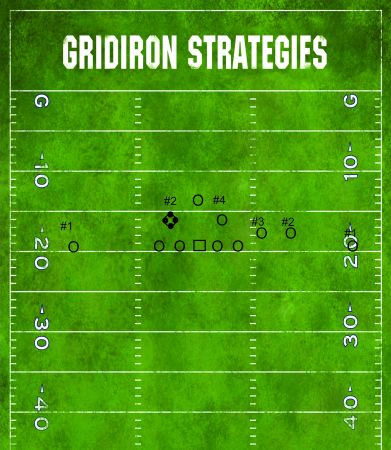
Diagram 1.
Motion away from the trips will change our numbering system for coverage reasons and for determining the strength of a formation. As an example, we will motion the #3 receiver to the offense’s right. He would now become the #2 receiver to the defense’s left and the trips’ side halfback would be #3 (Diagram 2).
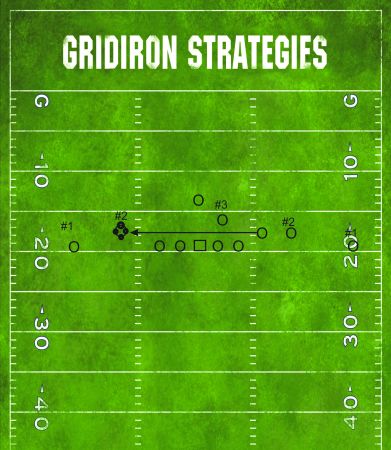
Diagram 2.
By using motion to balance the set, we now determine the strength of the set. If our opponents are in the middle of the field and motion is used to balance out the formation, we will determine (on the field) which side is the opponent’s strong side. Remember, we go wide side, strong side, and motion side. In this case, since the formation is in the middle of the field and there is no strong side initially, we will go with the motion side as the strong side.
In this situation, our corner “Lion” (L) will again be covering his deep outside one-third. The motion side safety, in this case “Panther” (P), moves laterally with motion, and, at the snap of the ball, into his cover or run support area. “Zeke” (Z) and “Rambo” will be playing games as to who has the C gap or outside containment (Diagram 3).
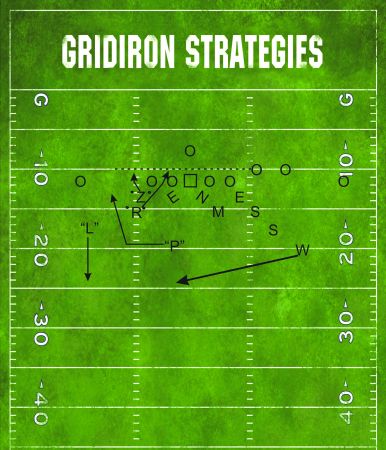
Diagram 3.
When a TE is the last man on the LOS and motion is run toward him, the coverage remains the same, but Zeke and Rambo’s responsibilities change. We now have an immediate inside threat with the TE. Panther will still rotate up to his left, and either Zeke or Rambo will now drop back into the zone where the TE could catch a quick pass while another defender hits the C gap (Diagram 4).
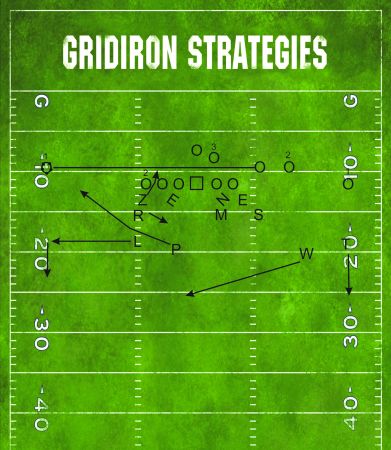
Diagram 4.
With the addition of the TE to the motion side, the offense also has greater run blocking potential. Our thinking tells us that if the halfback is away from the TE, we could be looking at a single off-tackle play to the TE side. There are several combination blitzes that can be used, and any combination will work effectively as long as you have the inside- outside run cut off, as well as taking the pass away from the TE. One example of a blitz combination is to have Zeke angle down across the face of the TE containing the C gap while Rambo takes outside containment, and Panther works his way up into the TE’s passing zone (Diagram 5).
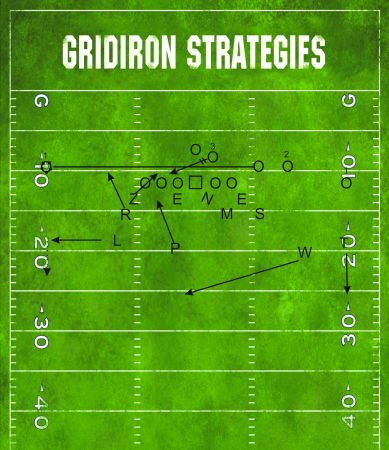
Diagram 5.
When the HB is to the tight end side and the same situation exists, we are thinking 1) roll out to the tight end side, 2) option to the TE side, and 3) QB keeper. In this case, we want the outside perimeter cut off immediately. Zeke will come across hard to contain outside, turning the play in. Rambo will hit the C gap and Panther will rotate up, keying the TE for a potential square out pattern (Diagram 6).
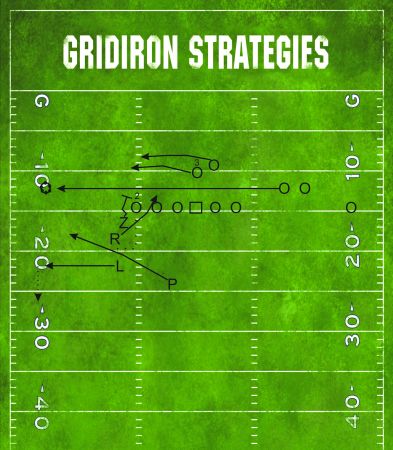
Diagram 6.
In the defense of our back side (away from motion), we want back side pressure immediately. We most often blitz Sam and he seems to get to the play more quickly by not making contact with an opponent. Our defensive end will become more aware of the quick pass, rather than outside containment, since he has a man on his outside. Mike’s responsibility on the short side of the field depends on the positioning of the halfback. When the halfback is to Mike’s right side, we most often see the halfback running away off tackle or used as a pass protector for the quick slant. Because of this, Mike defends the pass first and run second (Diagram 7).
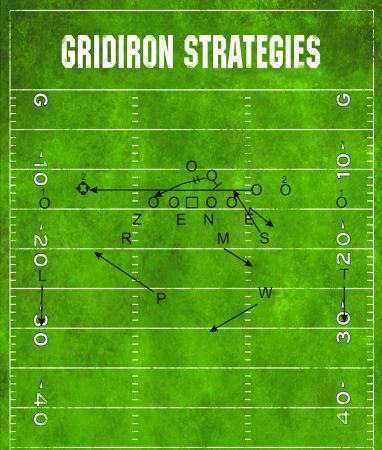
Diagram 7.
When the back is away from Mike, he will read run first, and then drop to his quick passing zone (Diagram 8). This is a good coaching point, and if you diagram your opponent’s tendencies, you will see that this will be the case in most situations.
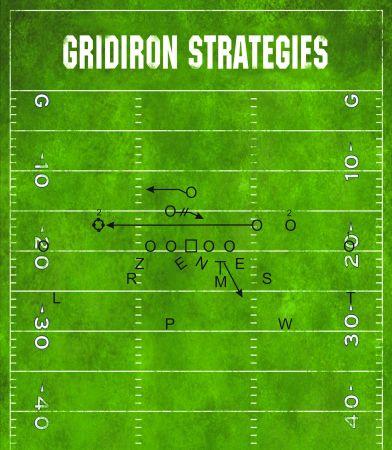
Diagram 8.
When motion is used away from the trips side, and the offense is in the middle of the field, we follow our base rules and apply inside-outside pressure on the perimeter with our secondary rotation to motion (Diagram 9).
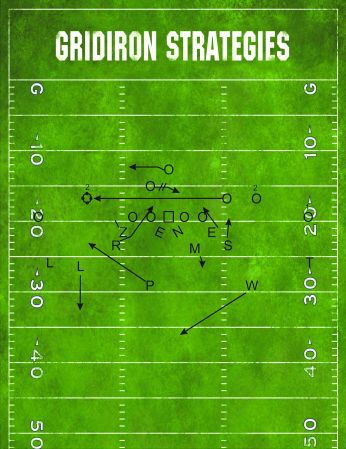
Diagram 9.
There will be times during the game when we use “Paste” coverage. This will take place by one or several of our outside linebackers in a man-to-man defense with one of the receivers in the under zone. An example of this to the motion side would be “Rambo-Paste-Motion”. In this case, Rambo would follow motion, lock up with him and play man- to-man as tight as possible for approximately 10-15 yards. Rambo is taught not to let this motion receiver to his inside. Once Rambo has played man-to-man for approximately 10-15 yards, he will turn inside and assume his under zone responsibilities (Diagram 10).
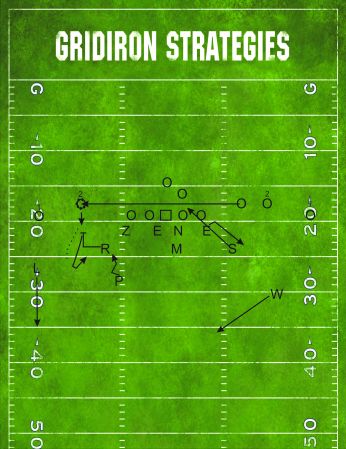
Diagram 10.
As in all defenses, it becomes a guessing game as to what you feel the offense is going to do. We may “Paste” Rambo or another outside linebacker in combination, only one to two times during a game. If the offense is thinking about a quick screen with motion, the Paste adjustment may alter their thinking. We may also choose to use Paste with Rambo on only the wide side of the field and adjust with Zeke, Panther, Mike and the nose tackle in blitz combinations (Diagram 11).
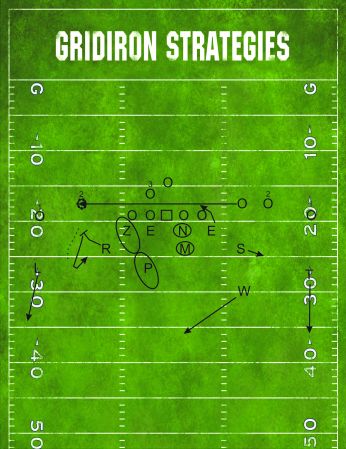
Diagram 11.
Once again, our scouting report, along with charting our opponent’s offensive plays and formations, has a great deal to do with the blitzes and the adjustments we make from week to week. You can basically do whatever you want with the base defense and blitzing schemes as long as you can cover as many areas as possible once the ball has been snapped.
In 1976, we had average size, speed, and overall athletic ability on our team. We put together a defense that we thought we could use, involving as many of our players as we could. However, during its development, we discovered that certain athletes were talented in very specific areas and could be utilized to our advantage at various times in the game.
If you have that athlete who loves contact but is not “bigger, quicker or stronger”, you might want to give him a crack at one of your perimeter positions. Of all the positions, your safeties and the Mike linebacker have to be your best athletes. These positions are very much interchangeable, and we have had great success switching these three athletes by position to allow us to utilize one of our specialists.
In other words, we might switch Mike to Panther and put our two quickest athletes in at the nose and the Mike position. This allows these quicker athletes to play blitzing games against a much slower offensive guard. There have been instances where we have been able to find mismatches somewhere along the line of scrimmage.
By putting so many players with special talents into the game, you will find that your second string and other players will take a more active roll in learning specific assignments. This will give everyone a chance to become better at what they can do, rather than what they can’t so. It has worked out very well for us in defending the trips offense.
About the author: Mike McDaniels has coached in northern Wisconsin and northern Michigan for 22 years. His overall record is 72-48. McDaniels has written two books, ‘Winning Football With a Modern Passing Attack’ and the ‘Pro 3-4: Winning Football With a Multi-Purpose Defense. He is currently teaching at Auburn High School in Rockford, IL.