FOR YOUR DEFENSIVE BACKS, three points regarding pattern reaction need constant emphasis:
1. Your defensive player should concentrate on the distance the receiver is running (short, medium or deep) and on the patterns that can be run in each specific area.
2. Your defensive player must understand that the instant he recognizes the pattern, called the recognition point, he leaves his backpedal, rolling over the proper foot.
3. Your defender must concentrate on the fact that the receiver will not catch the ball at the recognition point, but rather about 6 yards from the recognition point for inside patterns coming toward the ball and about 10 yards from the recognition point for patterns going away from the ball.
The point where the ball actually will be caught is called the interception point. This is where your DB must run to if he is to break up or intercept the pass.
The following drills will help your DBs perfect pattern recognition techniques. At the start, you will need to put out cones or chalk marks at the interception point. But as the drill is repeated and the skills are learned, remove the cones and force your defenders to judge the distance on their own.
Short Pattern
Reaction Drill
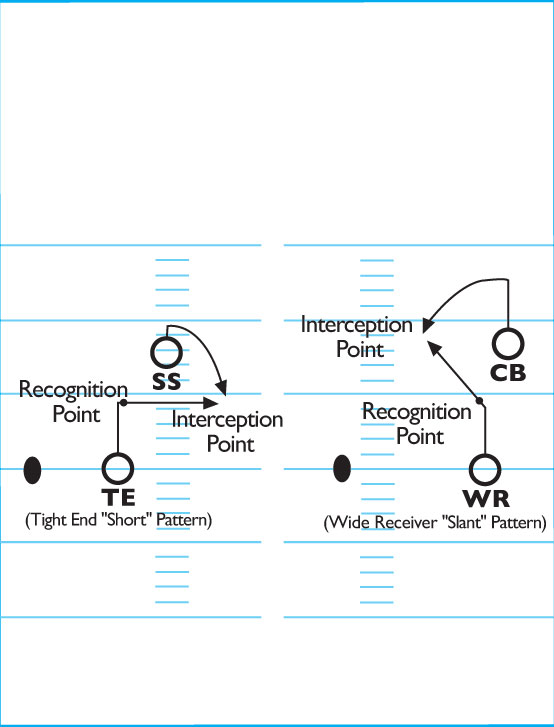
DIAGRAM 1: In running this drill, make sure each player has an opportunity to see all the patterns thrown in the short area, to see how the interception point changes with the direction of the pattern (toward or away from the ball) and to calculate the length of time the pass is in the air.
Your defensive players must stay in the habit of calling out each pattern as they recognize it and break toward the interception point.
Point out to your DBs that they will be looking at the quarterback (determining run or pass)at the start of each play. They will often see the QB take two steps, rise up and prepare to throw a short pattern.
|
|
Medium-Area
Pattern Reaction
DIAGRAM 2: As the distance a receiver is running from the line of scrimmage lengthens, the more time he has to square up with the DB. As a result, your DB must concentrate on staying on one shoulder or the other of the receiver, physically taking away one direction and being prepared to break in the other direction.
|
|
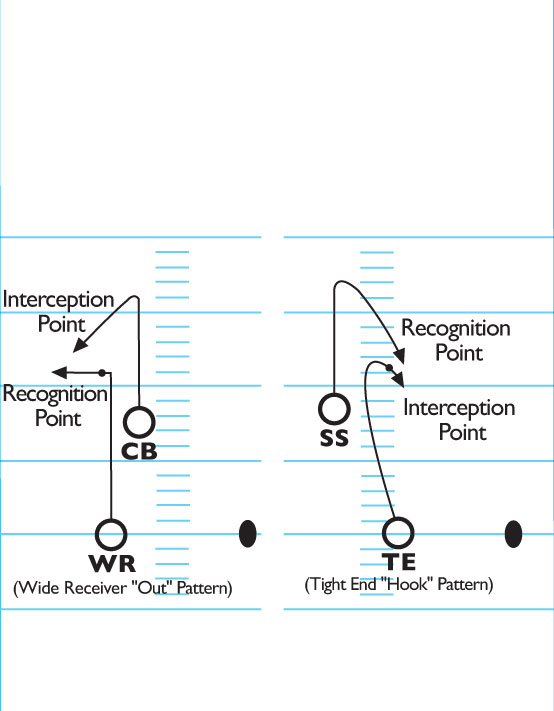
Again, your players should call out the patterns as they react to them. By the end of this drill, your players should have a feel for the different locations of the interception points. In the case of a hook pattern, the DB will be coming directly at the back of the receiver.
Deep-Area
Pattern Reaction
DIAGRAM 3: Because of the length of deep patterns run by tight ends and wide receivers, the interception point is farther away from the recognition point. This gives the DB more time to react. Even on a “post” pattern, the receiver will run at least 10 yards before he catches the pass.
|
|
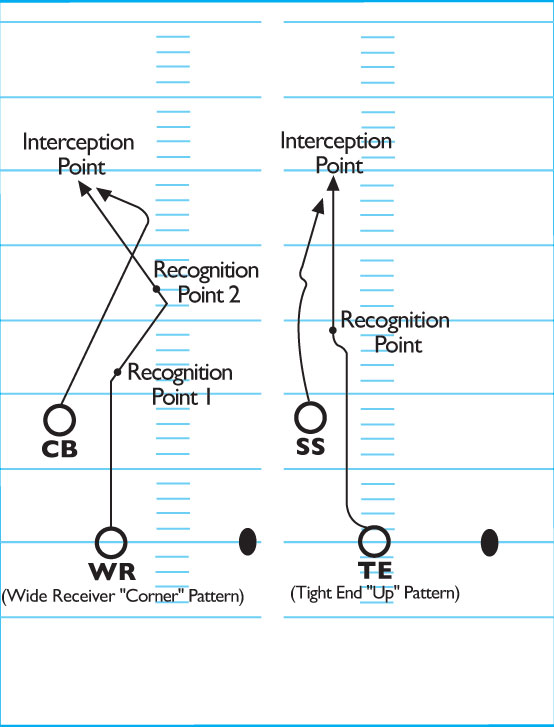
The DB can adjust his path to move directly to the interception point and not have to chase the receiver up the field. This concept is especially valuable when covering a double-move pattern, such as a “corner” or “comeback” pass.