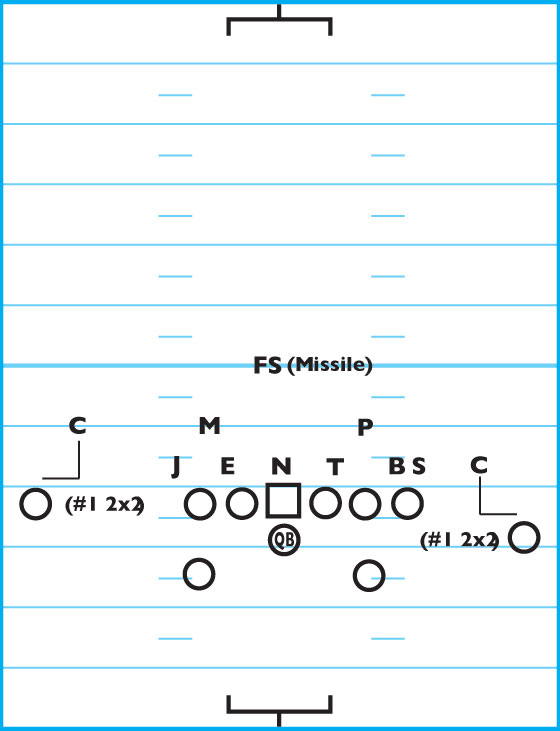
OUR PROGRAM USES a tough-to-block blitz package out of the 4-2 defense. The concept is based on Don James’ old University of Washington defense. We play mostly a man-to-man defense behind the front using the free safety as either a run stopper or blitzer, depending on the call.
To maximize pressure out of this defense, we’ve designed an effective system in which we name each player, as well as every gap. The only two players who don’t have a designated name are the cornerbacks.
The following diagram shows this naming system for our defensive players and the tags we use for the gaps.
DIAGRAM 1: Gap Names and Techniques.
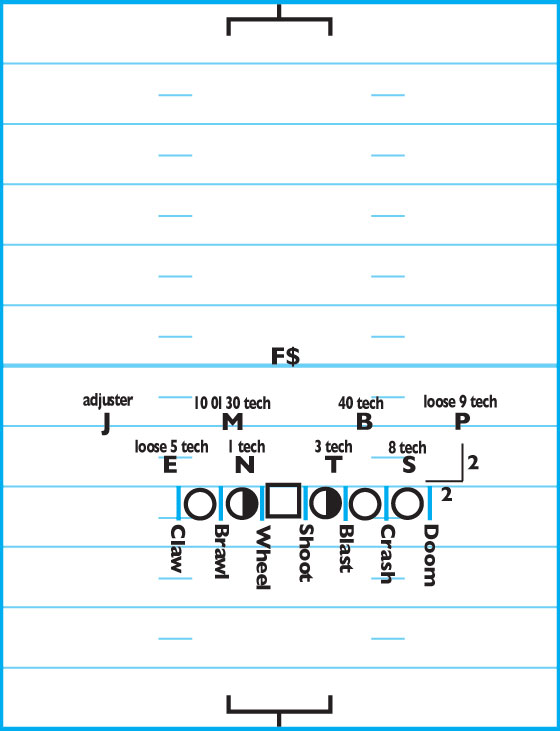
Being that we play mostly man defense, we’ll occasionally flop our corners. But we use man, Cover-3 and Cover-2 out of what we call a “Gone” (flop) call. A major key for helping players to remember their assignments and gap responsibilities come from the names. The following are the player names for this defensive system.
Player Names:
Stud (S): The strong-side DE. Aligns with the TE (8-technique).
Tackle (T): The strong-side DT. Aligns with the TE (3-technique).
Nose (N): The weak-side DT. Aligns away from the TE (1-technique).
Evil (E): The weak-side DE. Aligns away from the TE (loose 5-technique).
Buck (B): The strong-side LB. Aligns to the TE side (40-technique).
Mac (M): The middle LB Aligns to either a (10- or weak 30-technique).
Jac (J): The weak-side LB. Makes adjustments to the passing strength.
Free Safety (F$): Also known as the “Missile.” You can put him anywhere.
This becomes easy to remember for both coaches and players as the Stud, Tackle and Buc always align to the TE side, while the Nose, Evil and Mac always set up away from TE.
Serving as the “adjuster,” Jac always goes to the passing strength and acts as the “Patriot.” The strong safety always goes away from offense’s passing strength.
Buc and Mac are also called the “dogs” and we use them as inside defenders.
Stunts, Blitzes
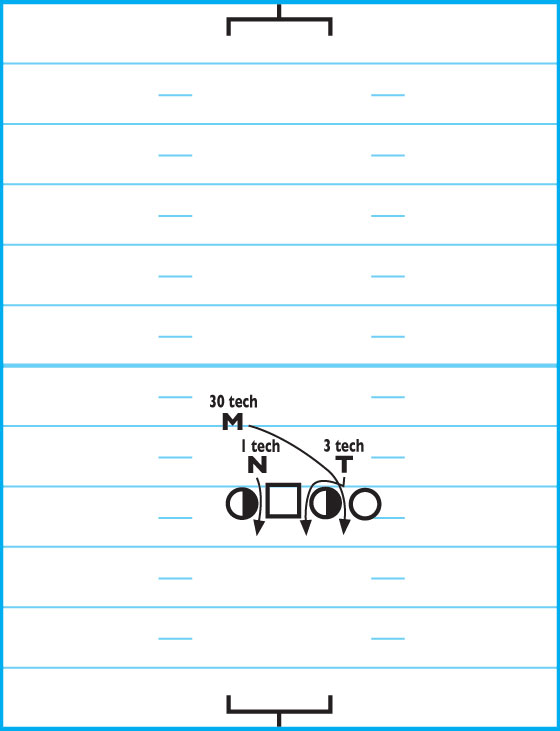
Once the players learn the names, gaps and responsibilities, we’re able to send any player into any gap. If a player has a gap responsibility and another blitzes into that gap, the other player “sparks to the open gap.”
DIAGRAM 2: “Mac Blast” Stunt. The N (1-tech has A-gap responsibility, while the M (30-tech) blitzes the strong-side B-gap and T (3-tech) “sparks” to the strong side A-gap.
As stated before, we use our “Missile”(F$) as another run stopper, a combo LB/pass-cover guy or as a blitzer. This forces the corners to cover people in either a press or loose man-to-man coverage. We’ll flop the corners if there are no wings or wide outs to their side (a “gone” call).
DIAGRAM 3: “Gone” Call (A).
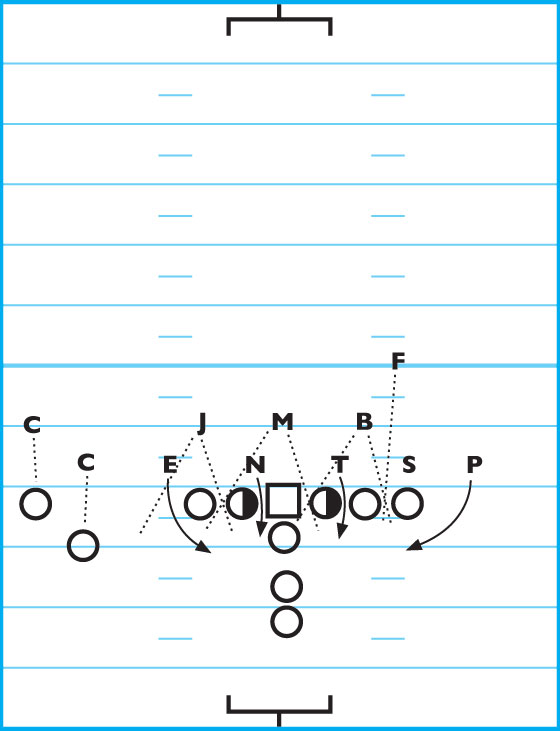
DIAGRAM 4: “Gone” Call (B).
“Dogs” Blitz
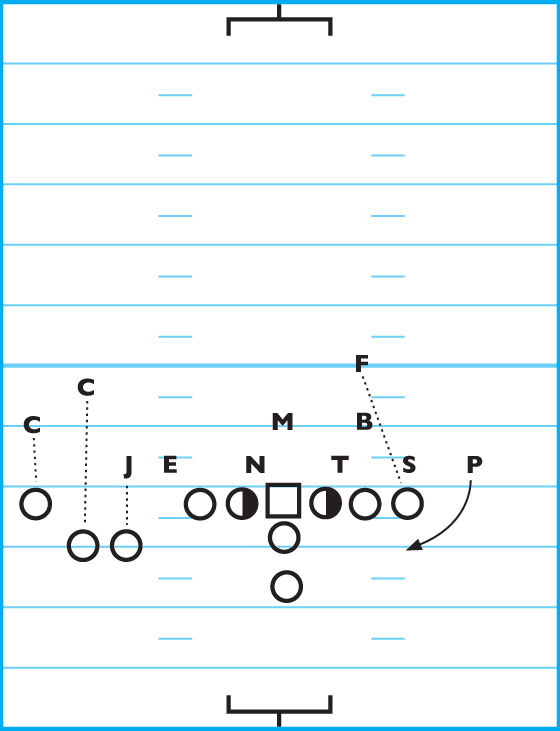
DIAGRAM 5: “Dogs” Buck and Mac Blitz (A).
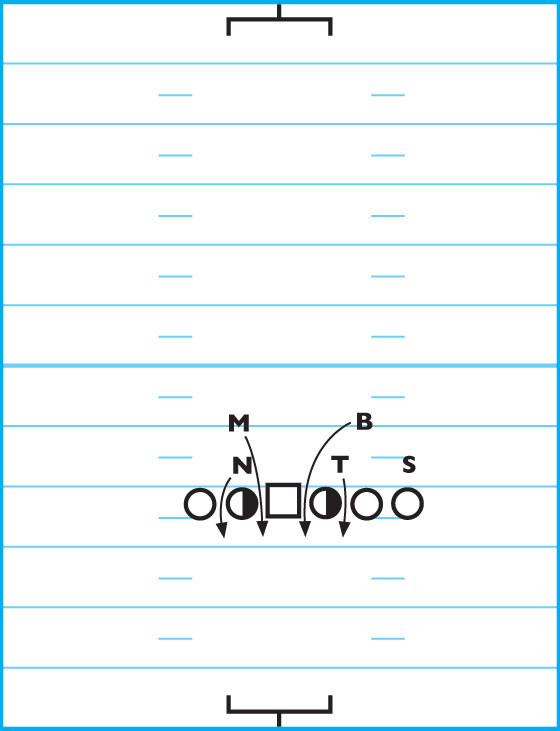
DIAGRAM 6: “Dogs” Buck and Mac Blitz (B).
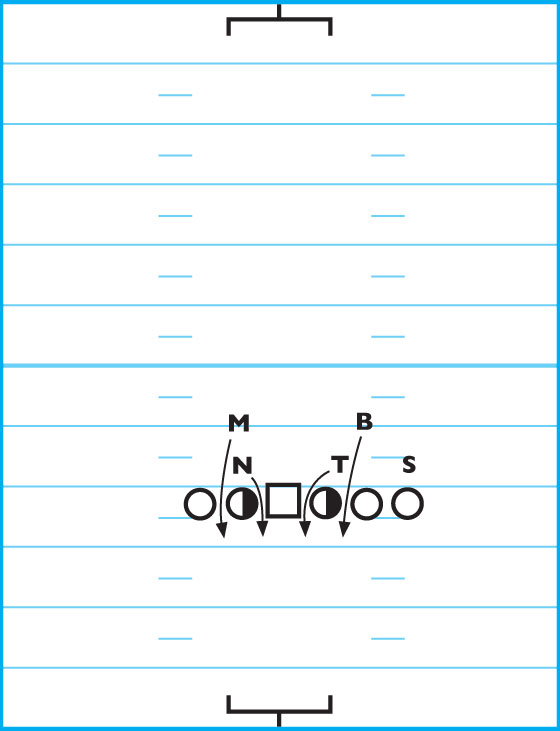
Dogs In, Dogs Out
In this defense you can easily send a dog and outside defender on a blitz or stunt by calling either “Pat” dogs or “Jac” dogs. When you call “Dogs In” Buck and Mac watch the A-gap, while in a “Dogs Out” call, Buck and Mac have B-gap responsibility.
DIAGRAM 7: “Dogs In” Blitz.
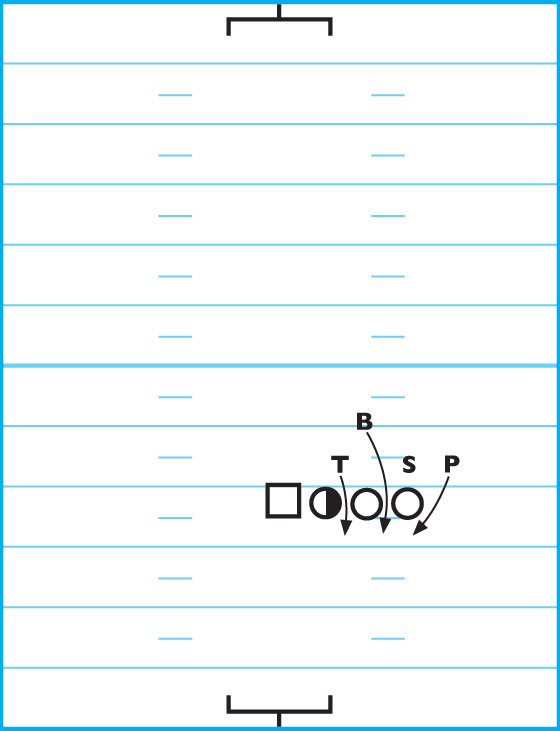
DIAGRAM 8: “Dogs Out” Blitz.
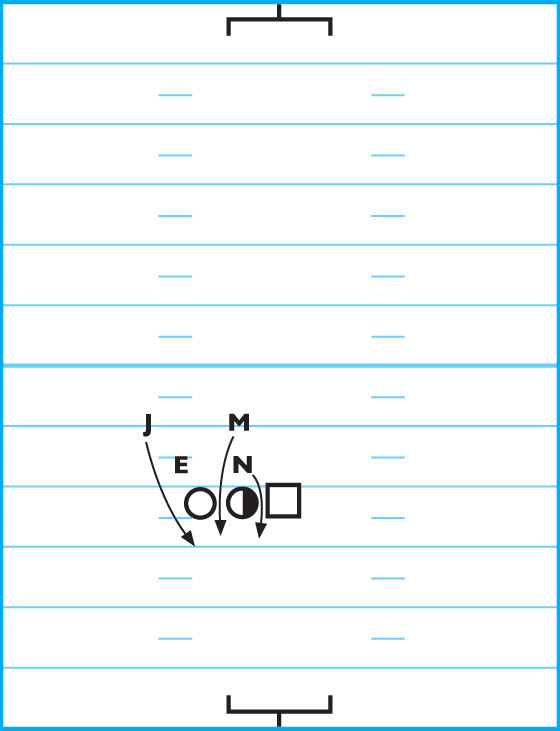
You can twist the linemen or exchange your Pat or Jac defender’s responsibility with your DEs.
We’ll often stem from our base defense into two other defenses. We’ll either “stem to” and “stem away” from the TE, which gives us the same looks but from different personnel.
DIAGRAM 9: Base Defense.
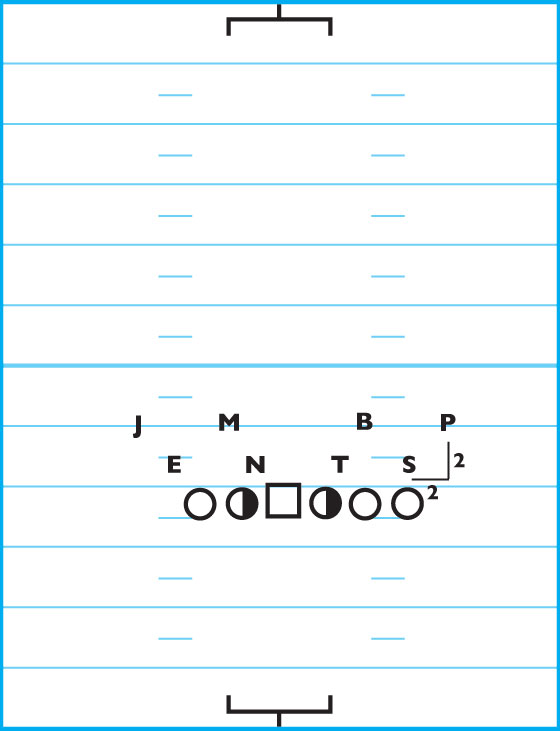
At certain times, we’ll stem to a “46 Defense” — both to the TE and away from him. One is called the “Bear” and the other the “Squeeze.”
DIAGRAM 10: Stem Away “Bear” (From 46 Defense).
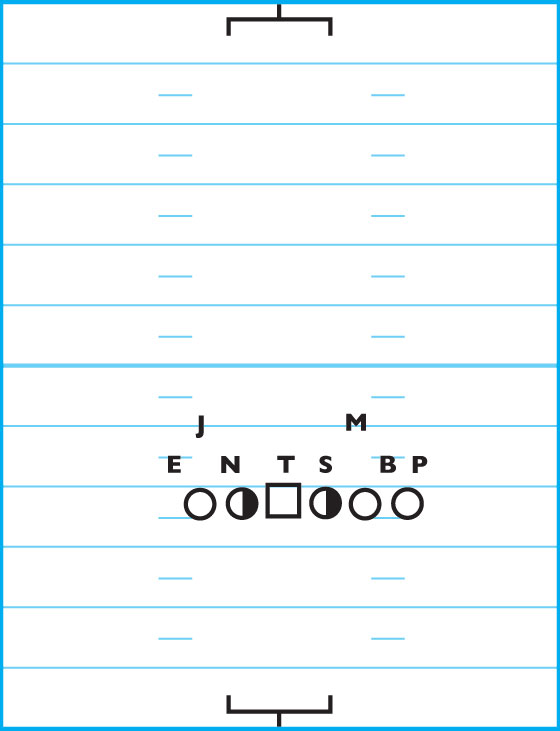
DIAGRAM 11: Stem To “Squeeze” (From 46 Defense).
Vs. Passing Situations
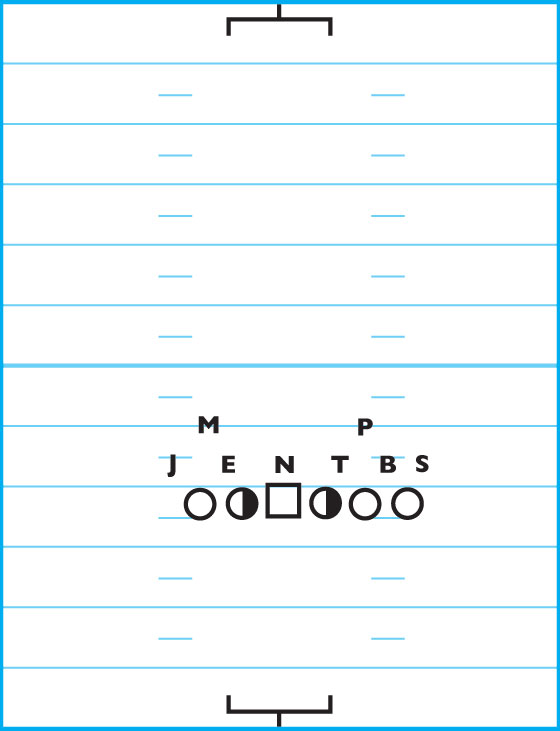
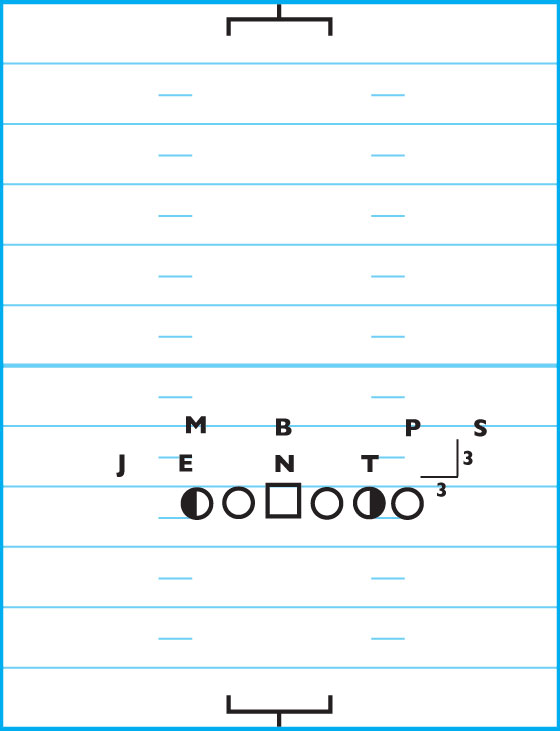
In passing situations or in parts of the game where we’ll want more speed or coverage, we’ll use a 3-3 stack defense and stem away.
In this situation, the corners play man-to-man and the F$ is positioned wherever you want the help.
DIAGRAM 12: 3-3 Stack Defense (Stem Away).
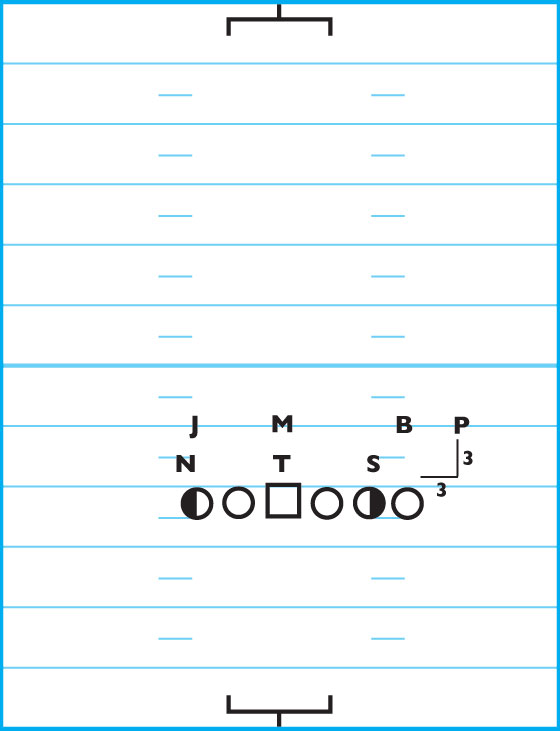
DIAGRAM 13: 3-3 Stack Defense (Stem To).
Teaching Terminology
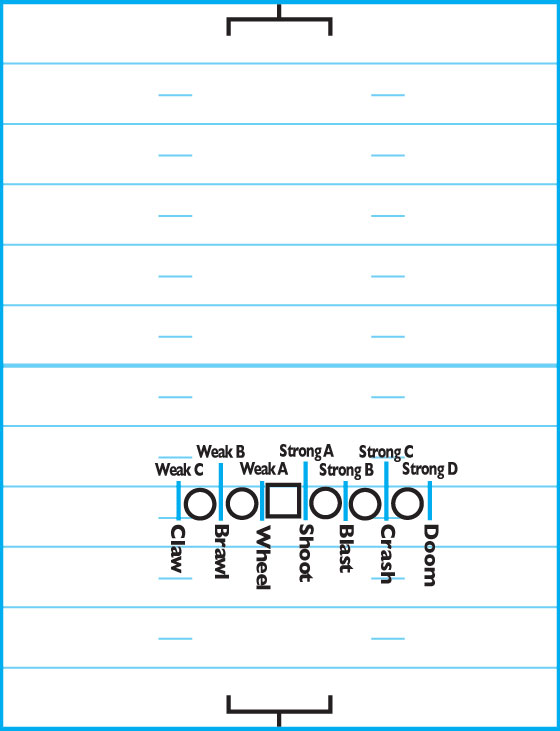
Naming each player and gap allows you to send anyone to any gap. To Help players remember gaps, we use the following nicknames.
Strong-Side A-Gap: “Shoot.”
Strong-Side B-Gap: “Blast.”
Strong-Side C-Gap: “Crash.”
Strong-Side D-Gap: “Doom.”
Weak-Side A-Gap: “Wheel.”
Weak-Side B-Gap: “Brawl.”
Weak-Side C-Gap: “Claw.”
DIAGRAM 14: Defensive Gaps.
Alignments
The following diagram brings everything together from the entire system and shows player placements and responsibilities for both the “Bear” and “Squeeze”alignments.
DIAGRAM 15: Bear Alignment.
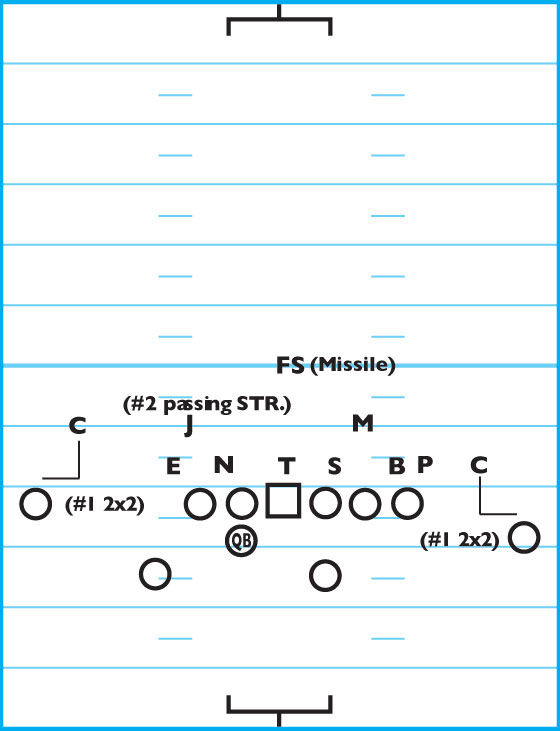
Pat: Places his inside foot on TE’s outside foot (on LOS as a 9-technique).
Buck: Places outside foot on TE’s inside foot and sets on LOS as a 7-tech.
Stud: Is shaded outside of the OG in a 3-technique.
Tackle: Is positioned head-up on the Center as a 0-technique.
Nose: Is shaded outside of the OG as a 3-technique.
Evil: Is 1 yard outside of OT, playing a loose 5-technique
Mac: Is head-up on the OT and is on the LOS as a 40-technique.
Jac: Is head-up on the OT and is on the LOS as a 40-technique.
Corners: Takes the receiver to his side.
Missile: Placement depends on call.
DIAGRAM 16: Squeeze Alignment. Notice the slight variations within the squeeze alignment. Most notably the placement of the Pat, Mac and Jac. The Evil is positioned in tighter and Missile placement depends on the call.